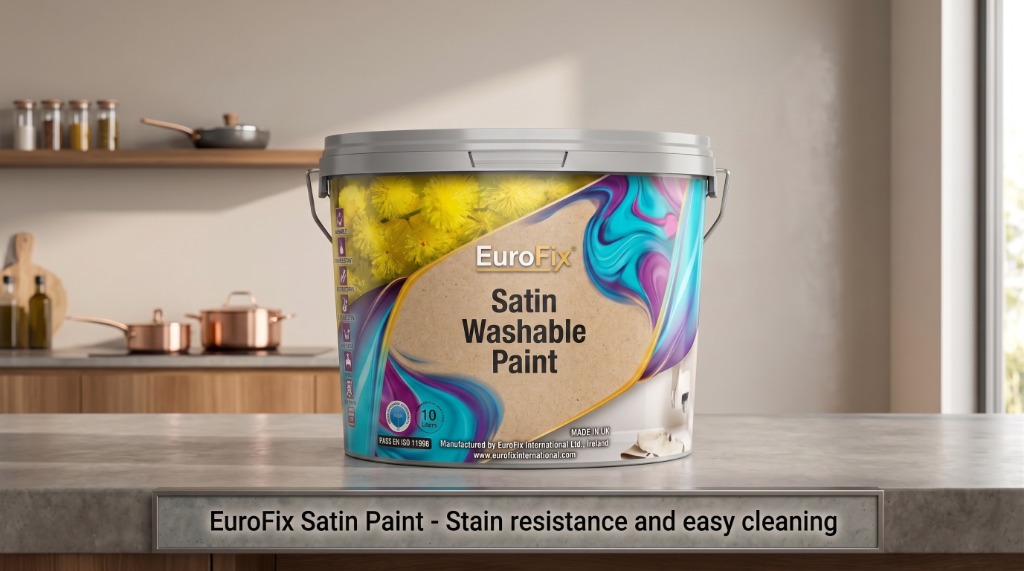
Exterior and interior walls are subjected to diverse environmental and physical attacks: driving rain, intense UV radiation, humidity, and constant physical contact. Today, we analyze the polymer chemistry behind **EuroFix modern water-based coatings** compared to **traditional lime/calcareous architectural washes** and **solvent-based oil paints**.
1. Hydrophobic Lotus Effect: Water Repellency
Traditional lime washes absorb water like a sponge. When rain hits the wall, the lime coating absorbs moisture, turning gray, damp, and causing humidity to travel deep into the concrete and brickwork. This damp environment promotes fungal growth, black mold, and concrete reinforcement corrosion.
EuroFix Exterior Weather-Shield uses advanced silicone resin technology. Water molecules cannot wet the silicone polymer skeleton. Instead, water droplets bead up instantly and slide off the vertical surface, gathering dirt and dust as they fall. This "Lotus Effect" ensures a self-cleaning wall that remains dry and pristine during severe storms.
2. Vapor Permeability: The Breathability Factor
Moisture inside a building must escape. If the exterior paint acts as an absolute plastic barrier, the rising water vapor gets trapped behind the paint layer. Under summer heat, this trapped moisture turns to steam, creating high pressure that bubbles, cracks, and peels the paint off.
Because of its unique microscopic polymer lattice, EuroFix Silicone Paint has excellent vapor permeability (Sd value < 0.14m). It allows microscopic gaseous water molecules to pass out, while preventing massive liquid water drops from coming in. The wall breathes comfortably, completely preventing bubbles, cracking, and peeling.
3. Modern Water-Based Acrylics vs. Traditional Oil-Based (Alkyd) Paints: The Drying & VOC Odor Battle
In commercial construction and premium interior finishing, project timelines and indoor air quality are essential B2B parameters. Let's analyze the technical and environmental differences between **EuroFix water-based acrylic/silicone coatings** and **traditional solvent-based oil (alkyd) paints**:
- The Curing & Drying Time Obstacle: Traditional oil paints cure slowly through chemical oxidation of organic solvents. They require 16 to 24 hours of drying time before a second coat can be applied. This causes massive bottlenecks, increasing scaffolding rental costs and delaying project handovers. EuroFix water-based coatings dry through simple water evaporation, taking only 1 to 2 hours. This permits multiple coats to be applied in a single day, accelerating work by 300%.
- Lingering Toxic VOC Odors: Solvent-based paints release high amounts of Volatile Organic Compounds (VOCs). These toxic, heavy solvents produce a suffocating odor that lingers on walls and furniture for weeks or months, triggering headaches, nausea, and asthma. EuroFix formulations are zero-VOC and virtually odorless, permitting residents, children, or hospital patients to occupy rooms safely immediately after coating.
- Color Yellowing & Crystalline Peeling: Oil paints undergo yellowing over time, especially in darker areas (corridors or behind cabinets) due to polymer aging. They turn extremely brittle, causing cracking and peeling under substrate settlement. EuroFix acrylic lattices retain maximum flexibility and pristine color fidelity for decades.
| Technical Parameter | Traditional Solvent-Based Oil Paint | EuroFix Water-Based Acrylic/Silicone |
|---|---|---|
| Drying Time (Re-coat) | 16 - 24 Hours (Extremely Slow) | 1 - 2 Hours (Ultra Fast) |
| VOCs & Odor Level | High VOCs (Toxic, lingering for weeks) | Zero-VOC (Odorless, environmentally safe) |
| Safe Occupancy | Delayed (Requires long ventilation) | Immediate (Safe for hospitals & children) |
| Color Yellowing | High (Yellows in dark rooms/hallways) | None (Sustained color purity) |
| Elasticity & Durability | Brittle (Cracks under wall settlement) | Highly Elastic (Bridges structural hair-cracks) |